KASHMIR MARKHOR
Capra falconeri Wagner, 1839Endangered/ Schedule-I- Scientific Name
- Capra falconeri Wagner, 1839
- Local Name/s
- Markhor
- Alternate Name/s
- Flare-horned Markhor
- Family/ Sub-family
- Bovidae/ Caprinae
- Status as per IUCN/ Wildlife (Protection) Act 1972
- Endangered/ Schedule-I
Global Distribution
Native to Central Asia (Turkmenistan, Uzbekistan, Tajikistan) and South Asia (Afghanistan, Pakistan, India)
Distribution in J&K
Kazinag National Park and Limber, Lachipora & Hirpora Wildlife Sanctuaries.
Population Status in India
Approximately 300 to 400.
Description
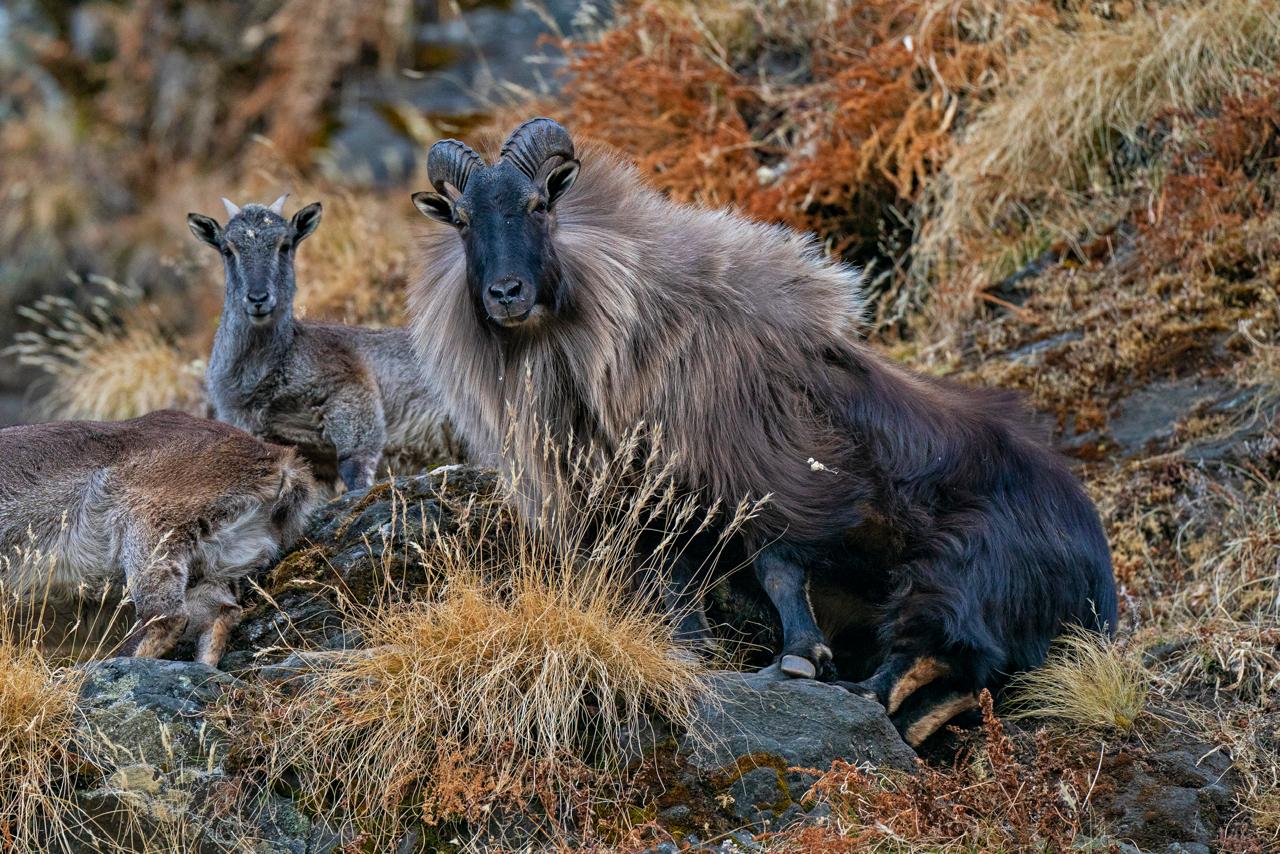
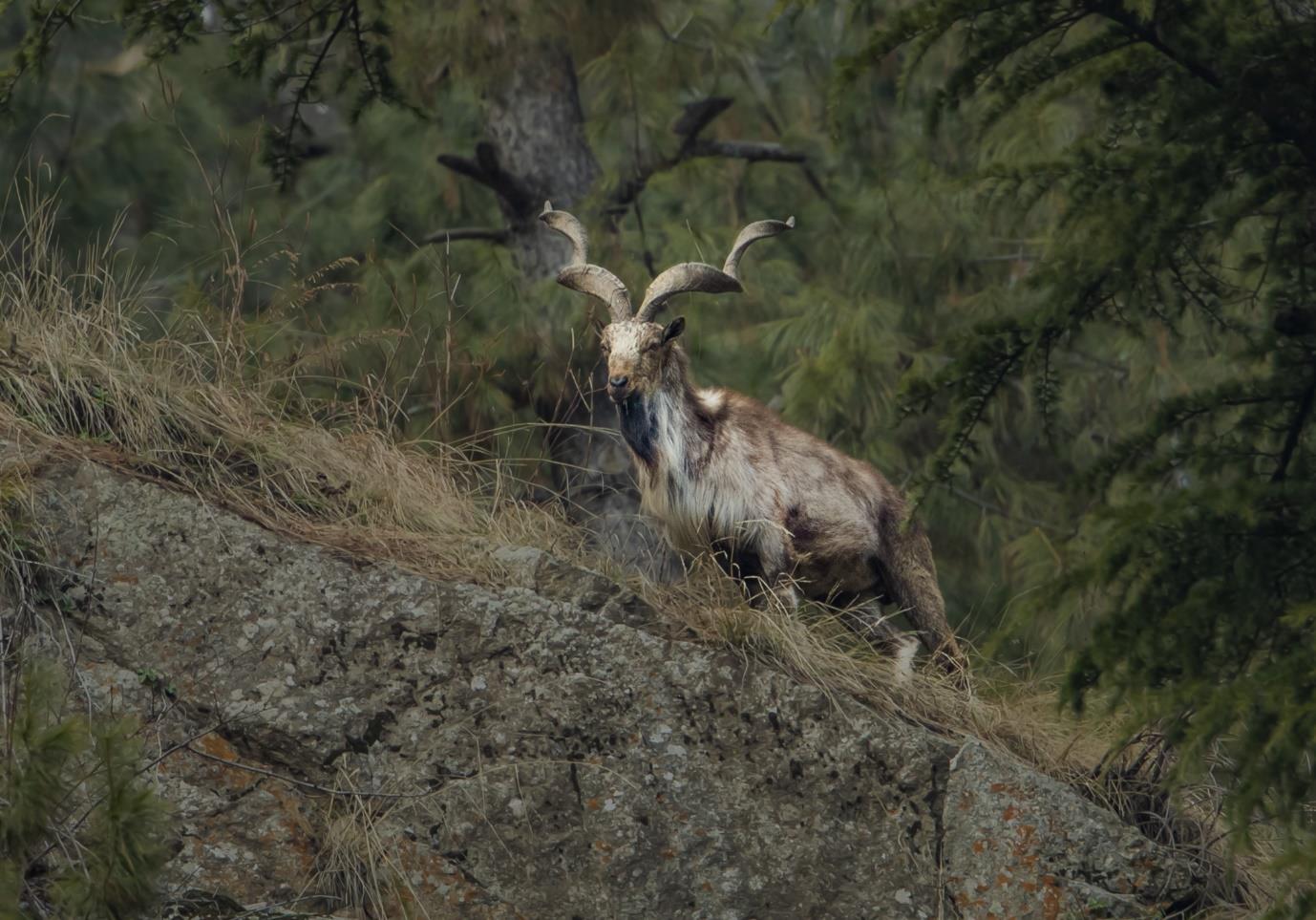
Markhor is a large mountain goat (largest in the world) with long fur, flowing beard and corkscrew horns. A male stands at up to 105 cm and may weigh between 80 to 108 kg, while females are much lighter: 30 to 50 kg. Both the sexes have horns. Horn length of males can reach up to 165 cm and that of a female is around 35 cm. Males are reddish brown in summer and greyish to creamy in winter. Both the sexes have dark brown muzzles, brown upper legs and brown flank stripe with white on belly and rump. Legs have a dark patch below the knees.
Ecology
Markhor are gregarious and live in herds. Females, yearlings and juvenile males are known to form medium to large herds. Adult males in the non-breeding season are either solitary or in small groups and join the females during the rut in late autumn. Markhor can easily manoeuvre through the most difficult terrains.
Habitat
Markhor live in open, barren, precipitous rocky cliffs surrounded by dense pine and fir forests and may also frequent alpine areas, characterised by birch and juniper.
Threats
Poaching, habitat fragmentation and anthropogenic activity.